Monday, April 23, 2018

Beatriz Milhazes


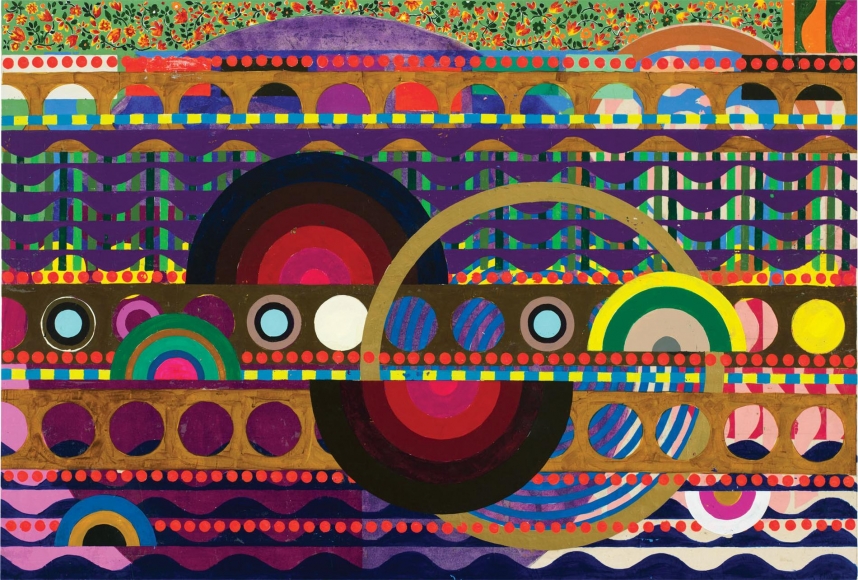
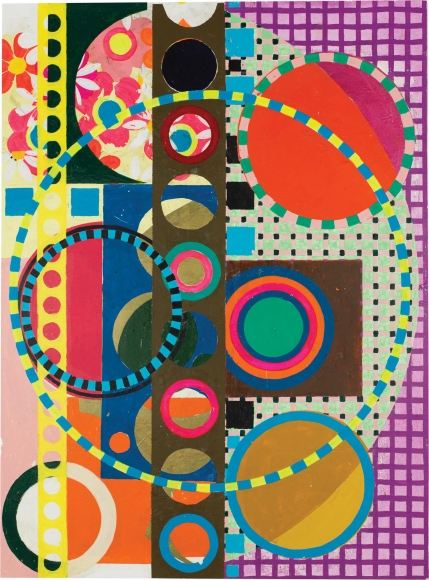
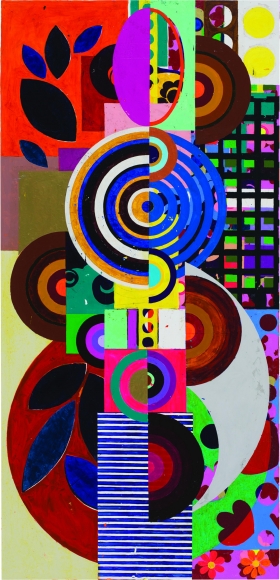
Beatriz Milhazes is a print maker, painter and collage artist, who was born in Rio de Janeiro in 1060. She is well known for using bright and vibrant colours in her work. Her work is associated with patterns and decoration movement. It is inspired by Brazilian culture imagery. She went to the School of Visual Arts in Rio De Janeiro, Brazil from 1980 to 1982 and the four years later she taught and co-ordinated activities there.
She has been working in a studio in Brazil since 1987, where she got inspired, to create the leaf like patterns in her art, by the botanical garden near the studio. She also has other influences such as architects and modernist painters. She incorporates everyday materials that have baroque patterns in them. Her work mostly is large, has bold colours, has silk screened shapes and has a lot of collage. Her work is print based. This is because printing gives the image a smooth finish whereas when using a brush you can see the stocks.

Here are a few images of her work:


I like how she uses printing techniques (hand-made art technique) to create vivid coloured art that looks mechanically produced. This is one of the aspects of her artwork that have influenced me to use Indian ink to create bold solid coloured patterns. Its also refreshing to see how she has taken the inspiration of her culture and environment (nature) in which she surrounds herself, to create her art in a similar manner to me. 

Refrences: 

Artnet.(2018).Beatriz Milhazes.[Online].[Accessed:13 Feb 2018].Available: https://s3.amazonaws.com/files.collageplatform.com.prod/image_cache/1010x580_fit/599f12405a4091c6048b4568/c774342b83ce2f74c4d608445a14e2eb.jpg

Jame Cohan.(2016).Beatriz Milhazes.[Online].[Accessed: 13 Feb 2018].Available: http://www.jamescohan.com/artists/beatriz-milhazes


Chila Kumari Burman

Other than William Morris, Chila Kumari Burman is another very influential artist for me.

Chila is also a British artist but her work explores the representation of females, specifically South Asian, through history as well as her identity. She looks at and gains inspiration from different categories of women, such as from politics, fashion, Bollywood and the people in her everyday life(family), and collages what she explores into her artwork. She uses a mixture of printing techniques and photography to create her work. Her art is her way of documenting the different things she learns and explores about both herself and the women she looks at. She uses a lot of self portraits in her work. I think its her own way of showing what she thinks of her self and finding belonging. The work she tends to create happen to be vibrant and eye catching, which is influenced by her culture. 

“These self-portraits position the construction of racial and sexual identity as a process that is crafted and fluid within the process of representation. My manipulation of the photographic image questions the idea of the photograph as a document of the empirical reality to reveal ‘an image of myself’… My work is about a continual exploration of my dual cultural identity and the construction of identities other than my own…” (Chila Kumari Burman quoted in Lynda Nead’s monograph on the artist, ‘Chila Kumari Burman: Beyond Two Cultures’, Kala Press, London 1995)


For me, this is the most influential piece out of her works. She has collaged together very vibrant and colourful images of women from different social, professional and stereotypical groups in a larger portrait of her self. I believe she is communicating to us that even though she is brought up in a western culture,the still has another part of her. Each image she has used is like a piece in a puzzle.She is trying to explore who she is. I like how she uses the photograph of her western self as the larger image to which the smaller images lay in. The blank spaces, in my opinion show that she is still finding the pieces to the puzzle or finding who she is. Overall, I really like her work as its more art on whats she learnt (documentation) rather than the questions still unanswered. 

References: 
Chila Kumari Burman.(2015).Chila Kumari Burman.[Online].[Accessed: 15 February 2018]. Available: http://www.chila-kumari-burman.co.uk/index2.htm

BBC.(2008).Artist Chila Kumari Burman.[Online].[Accessed: 15 February 2018]. Available: http://www.bbc.co.uk/insideout/content/articles/2008/04/30/north_west_chila_burman_s13_w10_feature.shtml

William Morris

William Morris is a British artist born in 1834. He is well known for his print designs. These include prints on fabric and on paper. As well as the prints he had created woven patterns on fabric. He made his prints into wallpaper designs. His wallpaper prints were very popular during the 19th century. Maybe what made his work so popular was the fact that is was something that people saw in there homes everyday, especially the rich. So by having such wall paper in ones home was a way of showing how rich or of which class you were.  However as printing became cheaper the burgeoning middle classes could also afford it and so the popularity and demand on people wanting these artistic prints increased. 


His block prints tend to use a muted colour palette. I like how all the designs are nature inspired bringing whats outside,inside. To me the parts of his work that inspire me the most is that his these wallpaper designs are repeatable and that they are detailed designs made by block printing methods. In addition to this I like how he uses the British nature, at that period, influence his patterns and colour pallet.

References: 
National trust.(2018).Who was William Morris?[Online].[Accessed:10 February 2018]. Available from:https://www.nationaltrust.org.uk/features/who-was-william-morris

Tate.(2018).William Morris 1834-1896.[Online].[Accessed: 10 February 2018].Available: http://www.tate.org.uk/art/artists/william-morris-388

V&A.(2018).Introducing William Morris. [Online].[Accessed: 10 February 2018]. Available: https://www.vam.ac.uk/articles/introducing-william-morris


Henna art

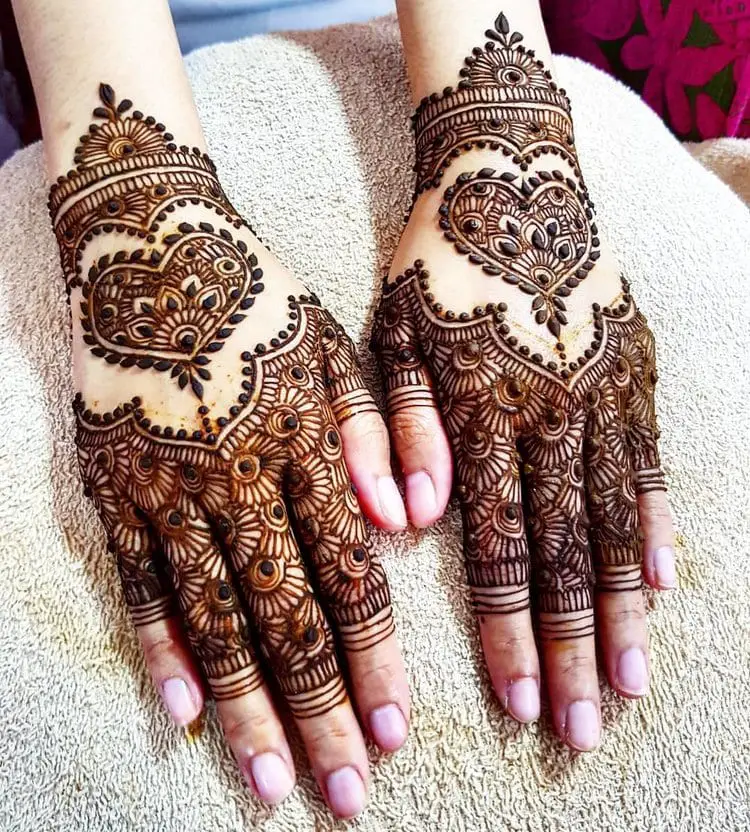
Henna is an Indian and Middle Eastern form of body art. It is made from the leaves of a plant that grows in the tropics. The leaves contain a pigment called 'Lawsone` which causes it to leave stains.

Originally, the Henna paste was applied to the hand and feet of people in the dessert as it has cooling properties. When it dried it would leave a stain on the body so it was then applies as designs on the body so that the stain was not as obvious. Over time different intricate patterns and meanings were adding to Henna. As the meaning for Henna changed over time, it not only began to be popular with the rich and middle class people, but also with the poor as Henna had become a way of decorating the body without the expensive jewelry. It also is used to dye the hair. As time moves on, Henna was used/ applied during celebrations (to took on different meanings) as a form of non permanent tattoos.
It was mainly used in the celebration of weddings. However, it now has westernised and is used more as a natural, semi-permanent tattoo as it stains the skin for only a few days.

Here are a few images of Henna art:


References: 

Silknstone.com.(2018). Silk & Stone - Origin and History of Henna.[online].[Accessed:12 January 2018] Available from: https://silknstone.com/About-Henna.html 

Fragrance X Library.(2017). The Art and History
of Henna as Bodyart.[online].[accessed: 12 January 2018]. Available from: https://www.fragrancex.com/fragrance-information/the-art-and-history-of-henna-as-bodyart.html


Fabian Oefner

Fabian Oefner was born in 1984. He currently lives and works in the country that he grew up in, Switzerland. Before going to the University of Applied Sciences and Art in Switzerland to do a BA in Product Design, he went to the Basel University of Art and completed his preliminary studies. There he learnt various artist skills like typography, photography, painting and many more. He liked to “explore and experiment with visualizing time and the invisible effects of the natural sciences” [1]. 
He prefers to present his work as a piece of photography, kinetic installation or as a film.
“The profound intention of Oefner’s art defies description. His explorations into the ephemeral poetry of time and the natural world stop us, allowing us to see the invisible, while provoking us to wonder about the myriad magical moments we do not see, while never considering the artist’s process that created them.”[2]

Studio Oefner. (2017). About Fabian Oefner. [Online]. [Accessed: 20 December 2017]. Available form: http://fabianoefner.com/?page_id=61
[1] First paragraph.


[2] Sixth paragraph.


‘’orchid’’ is the latest series of the ‘’Paint Action“ cycle, which is about modelling paint by natural forces. In this series, gravity created the structures seen in the images.
A tank was filled with several layers of different colours of liquid paint with the top layer being either black or white. Then, a sphere was thrown into the paint. As the falling object splashed into the tank, the paint was forced upwards, shaping the individual layers of paint into a blossom-like structure.
Similar to the other two series of the cycle, ‘’Orchid” is about preserving ephemeral beauty. Photographed with high speed devices, these images capture structures of sublime elegance, which appear only for a fraction of a second before disappearing beneath the surface again.

Studio Oefner. (2017). About Fabian Oefner. [Online]. [Accessed: 20 December 2017]. Available form: http://fabianoefner.com/?portfolio=orchid


The inspiration for this project comes from the action paintings by Jackson Pollock. Contrary to Pollock`s masterpieces, which show the result of his painting process, in the “Black Hole” series, the focus is put on the action itself: the moment, where the paint is in motion. The action painting is turned into a paint action, the process itself becomes a piece of art.

The setup is very simple: Various shades of acrylic paint are dripped onto a metallic rod, which is connected to a drill. When switched on, the paint starts to move away from the rod, creating these amazing looking structures.

Studio Oefner. (2017). About Fabian Oefner. [Online]. [Accessed: 20 December 2017]. Available form: http://fabianoefner.com/?portfolio=black-hole-2


This series is a continuation of my research of manipulating paint with different natural forces. In the „Black Hole“ series, it was centrifugal force, that shaped the paints into colorful carousels. This time I used air pressure to create what I call „liquid jewels“.
The structures you see are modeling balloons covered with paint right after they have been pricked with a needle. The air inside the ballon expands explosively, throwing the paint in all different directions. What I particularly love about the images is that if you look closely, you can see, how the individual shades start to mix with each other, blue and magenta becomes violet, red and yellow becomes orange…within a few microseconds, the paint forms into the most beautiful color combinations…and then its gone again. What remains is the capture of that firework of colors, frozen in time…


Studio Oefner. (2017). About Fabian Oefner. [Online]. [Accessed: 20 December 2017]. Available form: http://fabianoefner.com/?portfolio=liquid-jewel

 This is a LG advert.
Studio Oefner. (2017). About Fabian Oefner. [Online]. [Accessed: 20 December 2017]. Available form: http://fabianoefner.com/?portfolio=lg

The shapes, you see in these image are only about the size of a thumbnail. They are created with the aid of a very peculiar material: ferrofluid.

This liquid has a very unique property. It is magnetic, caused by the millions nano iron particles in it. When put under a magnetic field, the particles in the solution start to rearrange due to the attraction and repulsion of iron. If now water colors are added to the ferrofluid, the pop-art looking structures start to appear, forming into black channels and tiny ponds filled with rainbow colored surfaces. The reason why the black ferrofluid and the water colors don’t mix is that ferrofluid is, just like oil, hydrophobic. It therefore doesn’t mix with the water colors. At the same time it is held in position by the magnet underneath it. So it tries to find a way around the water colors and therefore forms these black channels.

Studio Oefner. (2017). About Fabian Oefner. [Online]. [Accessed: 20 December 2017]. Available form: http://fabianoefner.com/?portfolio=millefiori
  
How does sound look like? How can you make it visible? These were the two questions, that I tried to answer with this project.
Physically speaking, sound is always a vibration, whether it is the song of a nightingale, the sound of a piano or the human voice. It moves in waves, by the compression and rarefaction of the air molecules. Once the wave reaches our ear, our brain transforms it back into a noise, a melody etc.
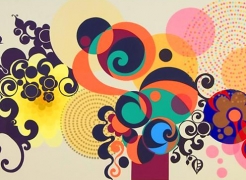
Now, I was thinking, how can I turn this audible signal, the wave, into a visual signal. I came up with a very simple, yet effective method: I mounted a thin plastic foil on top of the membrane of a common loud speaker. I then added hundreds of colorful, tiny crystals onto the foil. Every time now that I would play a sound through the speaker, the vibration caused by that sound will make the crystals to jump up and down, forming into these peculiar looking forms and figures you see in the images. Depending on the frequency, pitch and volume of the tone, the figures change their appearance. So now, the audible signal, the sound wave, has transformed into a visual signal, the shapes you see on the images  of „Dancing Colors“…sound has become visible.
Studio Oefner. (2017). About Fabian Oefner. [Online]. [Accessed: 20 December 2017]. Available form: http://fabianoefner.com/?portfolio=dancing-colors

Si Scott


Si Scott is a graphic designer from the United Kingdom. He was born in 1977. He left school at the age of 16 to do a BTEC in design in collage in order to study graphic design at Buckinghamshire University College for two years.
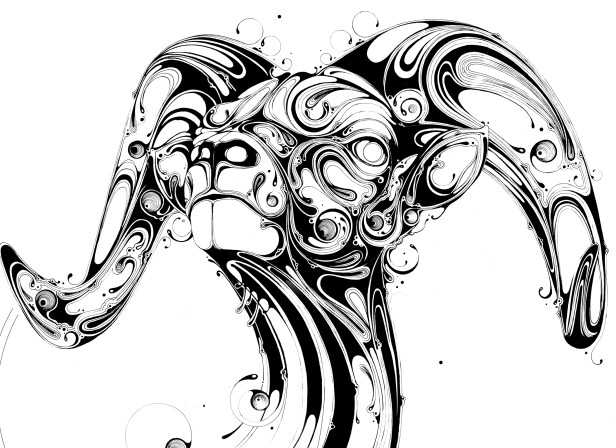
Si Scott specialises in typography. This is the different types of fonts that words can be written in. He has done work for famous brands such as; Vogue, Adidas, Coca-Cola, etc. His work, compared to other artists, is different and unique. His work is a mixture of handcrafted work and hand drawn work. Some of the materials that he uses includes; fine liners and paint. “I’d say my work is ninety percent hand and ten percent other methods, such as the computer for colouring, etc. I also use paint quite lot, or am starting to again anyway”. “I really like looking at designs and thinking: that attention to detain must have taken absolutely ages”. Once he has created the illustration on paper, he would then scan it at 125% so that when the size is decreased to the actual size so the work looks clearer. As well as typography he also does illustrations using the same techniques and materials.  He uses swirls and circles to create the image. He does not normally use colour in his work as he usually uses fine liners but a few of his drawing do have colour. His inspiration comes from music as he likes to listen to music when he works. His work is often compared to Alfred Mucha and Aubrey Beardsley`s work.
I like how he uses mainly fine liner pens to create all those swirls to make the words/designs look more exciting and then a mechanical process is used. There is a mixture of the work being hand made and digitally made. 

Here are few images of his work I have taken a liking in: 


In this last artwork, I particularly like the symmetry making the piece look balanced. Also,I like that it is monochrome and yet the piece look lively. 


Bibliography:


My Practice

My practice is a continuation of my previous years’ work. I have been exploring my identity as a Hindu and how my beliefs and culture may not be different to others that surround me. So I have been researching the Hindu culture. This year in particular, I have grown and interest in designs, patterns and colours that are used within the culture. So I have been researching into that. Whether it be sacred or secular, and comparing and combining it with designs and patterns from other cultures or countries.


As I’ve had a growing interest in pattern and Hindu culture, I thought to research into the origins and history of henna art which is a form of eastern body art. I’ve also been looking into carvings and designs on buildings across Europe as I had seen some similarities between the different design whilst traveling.

Because of my interest in design and pattern, some of the artist I have been looking at include, Beatriz Milhaze, Dan Funderburgh, William Morris and Chila Kumari Burman, Singh twins.  Other than Chila and the Singh Twins they all have the ‘pattern’ element in their work, were as these Chila and the twins explore their Indian identity.
 This research led me to change the way I create my work. I used oil and wax on canvas and now I’ve been exploring using ink and clay different platform like tiles. I use ink to mimic to designs created mechanically. I also use fine liners to create the smaller details within the patterns. As well as all the secondary research I have interviewed my elder family members,like my grandmother, who talked about making art in India in her youth with limited supplies,which in turn had influenced me to use clay.

 As well as working in the studio or within four walls, I like to work outside as through my research I found that most of the henna patterns and designs are nature inspired. By working outside the different patterns in nature help influence the designs I create.  
 

Here is an example of one of the fine line designs i have created while sitting outside, inspired Henna art and the nature around me.  

After creating a few intricate designs, and interviewing family, I created this piece. I have piped a clay design onto the wood canvas and filled the canvas with vibrant, contrasting colours, similar to traditional Indian outfits. 

I then changed the material I was working with. Inspired by working with after an talking to family, i decided to use a found tile. I thought it a good idea to bring in all the all the different parts of my research into one idea. The designs I create are influenced by architecture and Henna art, thus I decided that having my design on a tile would be a good idea.  On this piece, I have used Indian Ink to create the designs. The symmetry has been influenced by architecture and so has the arched and geometric shapes. The floral designs have been influenced by Henna art and William Morris. 

So what is next for me? In my previous works I tended to have used a lot of colour which I enjoyed. However, in my current work, I have used less and my art work has been more monochromatic. Therefore, I would like to create more work that has more colour and that is more celebratory like the Hindu culture I am exploring. As for as the materials I will use, I will like to continue to experiment using tiles to create repeated styled designs like William Morris.